

At its core, “OOC” stands for “out of character.” That’s the meaning you’ll run into most often, whether you’re reading a fanfiction review, watching a debate unfold in a comment section, or scrolling through a gaming forum.
The idea is simple. When a fictional character does something that doesn’t match how they’ve been written, fans call it OOC. Think of a character who’s always been calm and collected suddenly losing their temper for no real reason. That’s the kind of moment that gets flagged as OOC in movies discussions, TV show recaps, and book communities alike.
There’s a second meaning worth knowing too. Sometimes OOC means “out of context,” which is used when someone’s words or a screenshot get separated from the situation they were originally said in. You’ll spot this version a lot in online debates and social media arguments, where a quote gets shared without the full picture.
Both meanings are common. Which one applies usually depends on where you’re reading it. A gaming or fanfiction thread almost always means “out of character.” A heated Twitter thread quoting someone’s post usually means “out of context.”
Origin of “OOC”
OOC didn’t start as an internet buzzword. It actually traces back to tabletop roleplaying games like Dungeons and Dragons, long before social media turned it into a common acronym.
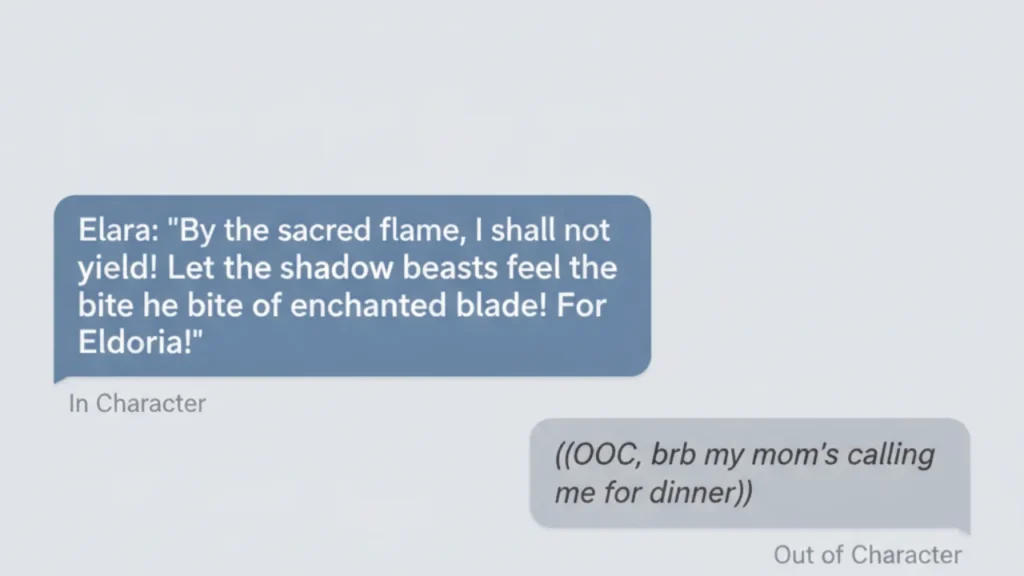
In these games, players stay “in character” for most of the session, speaking and acting as the role they’re playing. But real life doesn’t pause just because you’re mid quest. Someone might need a bathroom break, a snack, or just a second to ask a rules question without confusing the story. That’s where OOC came in. Players would say something like “((OOC, gonna grab a drink))” to signal they were stepping outside the game world for a moment, and BIC, meaning “back in character,” to signal their return.
From there, the phrase found a second home in online role-playing communities and fanfiction spaces, where writers and readers needed a quick way to point out when a character’s actions didn’t line up with who they were supposed to be. As fandoms grew and platforms like Wattpad and Archive Of Our Own picked up steam, OOC became a normal part of the vocabulary for anyone discussing character consistency.
Other Meanings of “OOC”
OOC isn’t locked into just one or two definitions. Depending on the setting, it can mean a few different things:
- Out of control: used casually to describe a chaotic situation, like someone going overboard at a party or a heated argument spiraling.
- Out of curiosity: a softer, more conversational use, often typed before a question, like “OOC, why’d you delete that post?”
- Out of cash: mostly seen in business or accounting contexts, referring to a company without enough cash flow to operate.
- Oman Oil Company: a corporate acronym used in business and energy sectors, unrelated to internet slang entirely.
Most of these are far less common than “out of character” or “out of context,” but they do show up, especially the business related ones if you’re reading something outside of fandom spaces.
How to Use “OOC” (With Example Conversations)
Using OOC correctly really just comes down to context. If you’re talking about a character acting strange compared to how they’re usually written, OOC as “out of character” fits perfectly. If you’re pointing out that someone’s words got twisted by being pulled from their original setting, you’re using OOC as “out of context.”
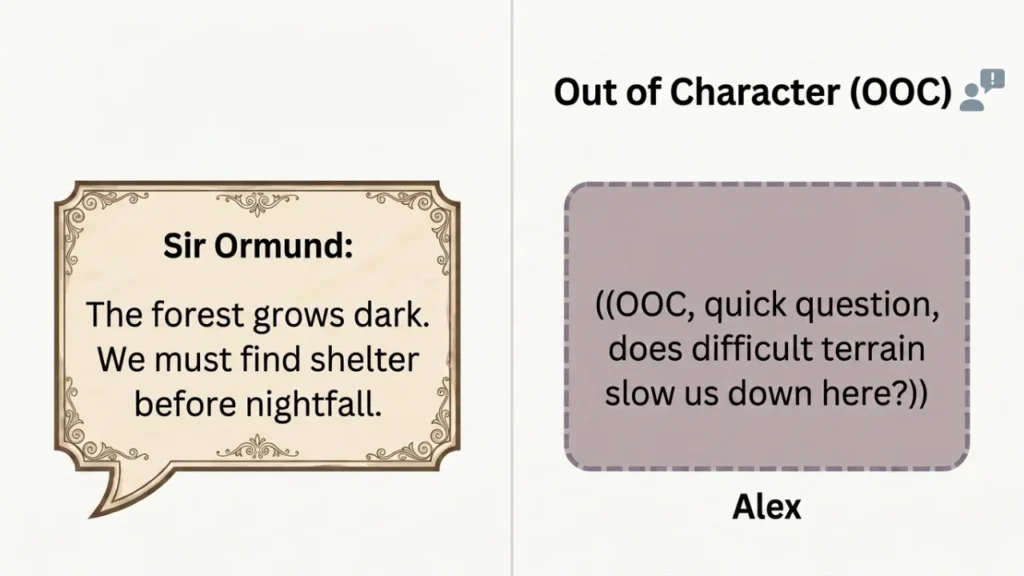
In roleplaying spaces, OOC is often wrapped in double parentheses or brackets so it’s visually separated from in character dialogue. This isn’t just a style choice, it actually helps everyone in the chat know instantly whether a message is part of the story or just a real life aside.
Example Sentences Using “OOC”
Here are a few examples of how OOC shows up in everyday conversations:
In a gaming or roleplay chat:
Player 1: ((OOC, brb, my mom’s calling me for dinner))
Player 2: ((OOC, no worries, take your time))
In a fanfiction comment:
“Not to be that person, but wasn’t this super OOC? He would never apologize first, that’s just not him.”
In a text between friends:
“Okay, but why did Sarah disappear from the group chat all week? “
One thing I’ve noticed scrolling through fandom Twitter is that OOC gets used almost as a badge of quality control. Fans genuinely care about characters staying true to who they are, and calling something out as OOC is often less about complaining and more about holding the writing to a certain standard.
Alternatives to “OOC”
If you’d rather skip the acronym altogether, there’s nothing wrong with just typing out what you mean. A few natural swaps include:
- Saying “out of character” or “not like them” instead of OOC when talking about a character
- Saying “taken out of context” instead of OOC when clarifying a misunderstood quote
- Saying “that’s out of control” to describe a chaotic situation.
Spelling it out can actually read clearer in situations where your audience might not be familiar with internet acronyms, like a work email or a message to someone older.
OOC in Roleplay and TTRPG Sessions
Tabletop roleplaying games are really where OOC earns its keep. In a live Dungeons and Dragons session or an online tabletop game, players are constantly slipping between two modes, staying in character for the story and stepping out to handle real world stuff or rules questions.
This is different from how OOC gets used in fanfiction or social media, where it’s more about commentary. In an active game session, OOC is a functional tool, not just a label. It keeps the story moving without confusing anyone about what’s actually happening in the fictional world versus real life.
Handling OOC Moments Without Breaking Immersion
The tricky part of any roleplay or TTRPG session is keeping OOC moments from derailing the story. A few things that genuinely help:
- Keep OOC comments brief and clearly marked, usually in brackets or parentheses
- Save longer OOC discussions, like rule disputes, for a dedicated break rather than mid scene
- Agree on a simple signal with your group ahead of time so everyone knows when someone’s stepping out of character
Groups that handle this well tend to have smoother sessions overall, since players aren’t left guessing whether a comment is part of the story or a real life aside.
Common Mistakes People Make When Using “OOC”
A few habits tend to trip people up when it comes to OOC:
- Mixing up OOC and IC (in character): forgetting to bracket an OOC comment can genuinely confuse other players or readers about what’s part of the story.
- Using OOC to complain rather than clarify: OOC callouts work best when they explain what specifically felt off, not just a vague “this is so OOC” with no context.
- Assuming everyone knows the meaning: outside of fandom or gaming spaces, OOC can come across as unclear, especially to readers unfamiliar with internet slang.
Frequently Asked Questions About “OOC”
What does OOC mean in slang?
In slang, OOC most often means “out of character,” describing behavior that doesn’t match how someone or a fictional character usually acts.
What is the meaning of OOC?
OOC is an acronym that most commonly stands for “out of character,” though it can also mean “out of context” depending on the setting.
What does OOC mean in chat?
In chats, especially gaming or roleplay spaces, OOC signals that a message is a real life aside and not part of the ongoing story or roleplay.
What does OOC mean at work?
In a workplace or business setting, OOC can occasionally refer to “out of cash,” describing a company lacking enough cash flow, though this usage is less common than the internet slang meaning.
What does OOC mean in jail?
There’s no widely documented or reliable use of OOC as jail specific terminology. In most contexts, including formal ones, OOC still refers back to “out of character” or “out of context.”
Final Thoughts
At the end of the day, OOC is one of those acronyms that adjusts to wherever you find it. In fandom spaces, it points out a character acting against their usual self. In debates, it flags a quote pulled from its original setting. And in tabletop games, it’s simply how players step outside the story for a moment. Once you know which meaning fits the room you’re in, you’ll never be confused by those three letters again.
Liked breaking down “OOC”? SyntaxMoves has plenty more slang, acronyms, and internet terms explained just as simply, so you’re never left confused by what people are typing again.

1 thought on ““OOC” Meaning: What It Stands For, Origin & How to Use It Right”